
Toronto Wedding DJ Guide: Music Trends for 2026
Toronto wedding music in 2026 is becoming more personal and more flexible. Rather than building the night around one genre, couples are choosing meaningful ceremony songs, a relaxed soundtrack for cocktails and dinner, and a reception set that can move naturally between cultures, generations and energy levels.
From the planning conversations our Sound of Harmony team has with couples, the strongest music plans are not copied from a generic playlist. They reflect the people in the room and give the DJ enough flexibility to respond to the dance floor. This guide explains the styles that come up regularly, how music can support each part of the day, and when a DJ, live band or hybrid approach may make sense.
If you are comparing entertainment options now, visit our Toronto wedding DJ services page for details about our approach and coverage. You can also browse the Toronto wedding DJ planning guides for related advice on songs, timelines and reception planning.
What Toronto couples are asking for in 2026
The clearest direction we hear is that couples want the day to feel connected. The ceremony, cocktail hour, dinner and dance floor can each have a distinct mood, but the transitions should still feel intentional. A well-planned soundtrack helps guests understand when to listen, relax, celebrate and dance without making every change feel like an announcement.
Styles that often come up in our planning conversations include:
- Afrobeats and Amapiano for smooth, rhythmic energy during the reception or later in the evening.
- Bhangra and Bollywood woven into Top 40, R&B and familiar throwbacks for a varied guest list.
- Latin music, including Reggaeton, Salsa favourites and other selections chosen with the couple.
- Hip-hop and R&B from different eras, with attention to the exact versions and clean edits requested.
- House and dance remixes when the couple wants a more club-influenced part of the night.
- 90s and 2000s throwbacks that give guests across several age groups a familiar entry point to the dance floor.
These are possibilities, not a required formula. One wedding may need longer cultural sets so guests can settle into each style; another may feel better with shorter transitions between genres. During planning, we ask which songs and traditions matter, which versions are appropriate, and whether there are moments when a particular side of the family should be invited into the celebration.
Multicultural music works best when it is planned with context
A multicultural reception should not feel as though different parts of the soundtrack have been placed into isolated boxes. Couples can identify the songs that carry personal or cultural importance, then work with the DJ on where those songs fit naturally in the timeline. That might mean a dedicated set, a gradual transition between styles, or several shorter moments throughout the night.
Pronunciation, edited versions and family expectations are worth discussing before the wedding. Sharing reference links for less familiar songs also helps the DJ prepare the exact recordings you want. The goal is not to guess what every guest will enjoy; it is to understand the couple’s priorities and read the room without losing those priorities.
A must-play list and a do-not-play list are still useful, but they work best alongside guidance about the overall feeling you want. “Elegant during dinner, familiar at the start of dancing, then more energetic later” tells the DJ more than a list of titles alone.
How a Toronto wedding DJ supports each part of the day
A DJ can change styles quickly, use the original recordings your guests recognize and adjust the pace as the room changes. That flexibility is particularly useful when the guest list includes several cultures, age groups or musical preferences.
- Ceremony: Clear microphone coverage and precise song cues matter more than volume. Confirm processional order, cue points and whether different spaces need separate audio.
- Cocktail hour: Music should create atmosphere while remaining comfortable for conversation. Soul, jazz, acoustic selections, R&B, lounge music or a culturally specific playlist can all work when the volume is controlled.
- Dinner and formalities: Entrances, speeches, special dances and meal service need coordinated transitions. The DJ and MC should understand the timeline and know who is responsible for each announcement.
- Open dancing: A prepared DJ can use requests, the couple’s priorities and live feedback from the room to shape the set rather than following a fixed playlist from beginning to end.
- Late night: If the timeline allows, the music can become more focused and energetic as the remaining crowd changes.
Venue logistics also affect the music plan. Access times, room layout, electrical access, sound restrictions and the location of speeches should be confirmed before the event. Ask what equipment will be supplied for each space and how the team will handle a ceremony and reception in different rooms.
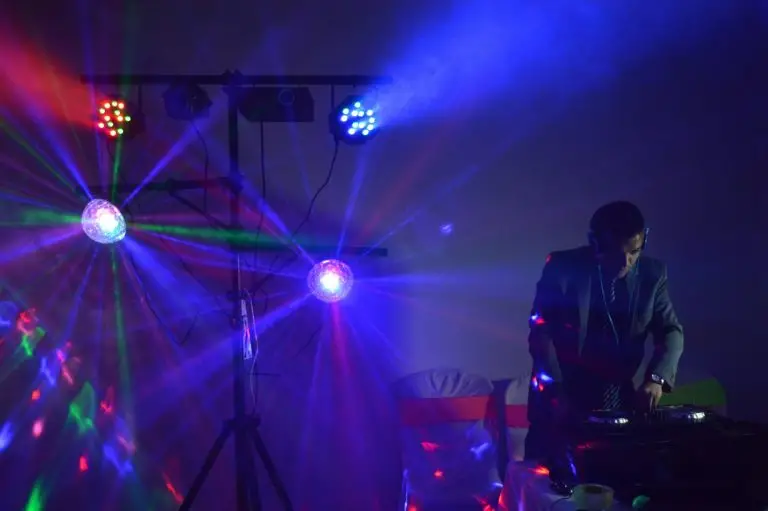
Our wedding DJ packages outline the available entertainment options, while our real wedding gallery shows examples of reception lighting and event setups.
DJ, live band or hybrid: choosing by moment
A live band and a DJ create different experiences. Neither choice is automatically better; the right format depends on the room, timeline, budget, preferred music and the atmosphere you want guests to remember.
- Choose a DJ when you want broad genre coverage, the exact recorded versions of songs, fast changes between styles and a compact setup.
- Choose live musicians when the performance itself is an important part of the experience and you value the character of live arrangements.
- Consider a hybrid when you want live musicians for selected moments and a DJ for broader coverage during open dancing.
For the ceremony, live strings, keys or an acoustic performer can create an intimate atmosphere, while a DJ can provide exact edits and tightly timed cues. During cocktails or dinner, a small ensemble can add visual and musical presence without taking over the room. For a reception that must move through many genres, a DJ may offer more flexibility.
A DJ paired with a live saxophonist or percussionist can be exciting, but the performers should plan together. Confirm space, audio connections, set times and how requests will be handled rather than assuming the combination will coordinate itself on the wedding day.
A practical music-planning checklist
- Choose the key songs for the ceremony, entrances and special dances.
- Share a short must-play list and a clear do-not-play list.
- Identify cultural traditions, important artists and the correct song versions.
- Describe how you want the energy to change from cocktails through late night.
- Decide how guest requests should be handled.
- Confirm who will make announcements and coordinate with the venue or planner.
- Review access, setup, sound and timing requirements for every room being used.
- Leave enough flexibility for the DJ to respond to the guests who are actually dancing.
The best soundtrack is not simply a list of popular songs. It is a plan for the whole day: personal choices where they matter, smooth transitions between moments, and enough room for the celebration to develop naturally.
To keep planning, explore our Toronto wedding music and reception guides. When you are ready to discuss your date, venue and guest mix, review our wedding DJ services in Toronto or meet the team on the Sound of Harmony about page.
Planning a wedding in Toronto?
Tell us about your date, venue and the experience you want to create. Check availability with Sound of Harmony.